Category: featured

  • Improving Wildlife Habitat in Oyster Cove, Shipyard River, and Eel Creek Watersheds

    This year Kensington North Watersheds Association has received funding through the Wildlife Conservation Fund for two projects! The first project is focused on monitoring river otters, and if you would like more information, you can check out the “News” section of our website (srv1185769.hstgr.cloud/). The second project focuses on improving wildlife habitat in three watersheds in our area: Oyster Creek watershed in Hamilton, Shipyard River watershed also in Hamilton, and Eel Creek watershed in Burlington. Staff have performed some stream work in the past few years in Shipyard River, as well as some tree planting in both Shipyard River and Eel Creek, but this project will allow us to perform more intensive habitat restoration work.

    Planting trees in Eel Creek watershed

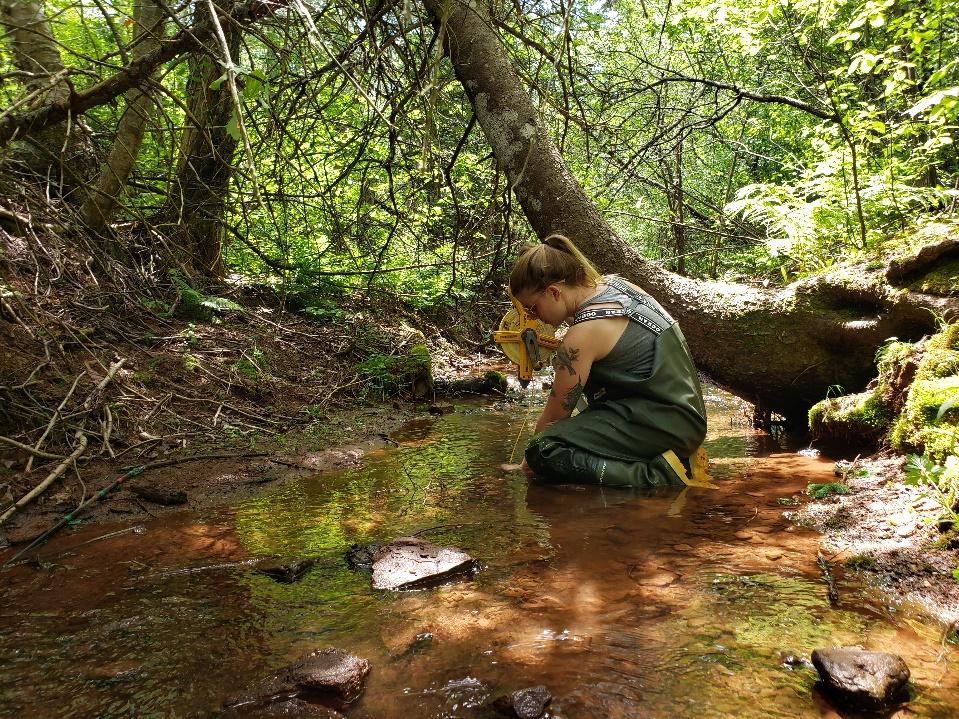
    Staff began working on this project by first completing riparian and stream health assessments. These assessments involve staff walking along the stream and noting various habitat features such as the presence or absence of invasive species, the amount of forest and canopy cover, the composition of stream substrate, whether there are any perched culverts, and many other important features. Performing these assessments gives us an idea of the challenges facing each system and allows us to better plan for the habitat restoration work we will be completing.

    After completing stream assessments for this project, staff began to perform habitat restoration work including tree planting and stream maintenance. So far, staff have planted over 300 native trees and shrubs in all three of the targeted watersheds. Having a forested riparian zone provides numerous benefits to wildlife, such as providing shade and cooling the water for fish, providing food and habitat for birds and mammals, and stabilizing the streambanks, thereby preventing erosion. If needed, we install tree guards to protect hardwoods from herbivore damage, and we cut back any tall grasses or weeds around the trees. We also plan to perform regular maintenance throughout the growing season to ensure the best chances of survival for the trees we have planted.

    The stream work that has been completed so far has been in Eel Creek and Shipyard River watersheds. Stream work involves removing fallen trees and clearing out branches that may be catching smaller debris, while making sure not to remove too much large woody debris. If needed, staff may install brush mats made out of fir boughs. Brush mats help collect suspended sediments during high water events, removing some of the excess sediment from the stream. Another task that has been performed as part of this project includes routinely monitoring the water quality. Some water quality parameters we look at include dissolved oxygen, temperature, pH, and nitrates. Once they are available, we will upload the water quality data from this project to Atlantic DataStream for public access and visualization. Keep an eye on our social media (Facebook: Kensington North Watersheds Association and Instagram: Kensington_north_watersheds) for updates on this project!

    Before and after clearing branches off a fallen tree in Shipyard River.

    Funding for this project comes from the PEI Wildlife Conservation fund, which supports projects across PEI that benefit wildlife and wildlife conservation. Funding comes from the sale of motor vehicle conservation plates and annual conservation fees incorporated into PEI licences for hunting, angling and trapping.

  • Kensington North Watersheds Association Receives Funding to Monitor River Otters

    KNWSA is pleased to announce we have received funding through the Wildlife Conservation Fund (WCF) to monitor river otter populations in our area. It may come as a surprise to hear that there is a river otter population on PEI, as most people would never have seen an otter here. That is because river otters have, until recently, been extirpated (locally extinct) from PEI.

    Over the last few hundred years populations of mammals on PEI have changed considerably. For example, PEI used to have populations of black bear, lynx, and even caribou! During the 19th century, river otter fur was very valuable, and this caused the population to be under high pressure from trapping. By the end of the 19th century, records suggest river otters were either very scarce or already gone from the Island.

    Recently, there have been several otter sightings on PEI, including some accidental trappings. Last year Kensington North partnered with PEI Forests, Fish, and Wildlife to monitor otters with the use of remote cameras, also known as trail cameras. This year with the funding received from WCF, we are able to purchase several more remote cameras to expand our monitoring efforts!

    River otters captured using remote trail camera

    The new remote cameras will be set up in various habitats where river otters may be present. These cameras have a passive infra-red sensor which can detect a temperature differential when a heat source, such as an animal, moves in front of the sensor. When the sensor is triggered, the camera takes a picture of the animal in front of it.

    The main goals of our monitoring project are to determine how widespread and established otter populations are in our area and to develop best management practices for using remote cameras to monitor river otters. While our project focuses on otters, we also get pictures of many other types of wildlife using the same habitat. Remote cameras are a great, minimally invasive way to observe wildlife we may not normally see. If you have any wildlife sightings, whether they were taken with a remote camera or not, you can share them online at www.peinaturetracker.ca.

    This project was funded by the Wildlife Conservation Fund, which provides financial support to groups across PEI working to benefit wildlife and wildlife conservation. The funding for WCF comes from annual conservation fees incorporated into PEI licenses for hunting, angling and trapping, and Conservation Plates purchased for motor vehicles in PEI. If you would like to support more projects like this, consider purchasing a conservation license plate!

  • Your Help is Needed to Monitor Local Bat Populations!

    Bats play a vital role not only in our ecosystems but also in our economies! Because bats eat so many insects, they decrease the need for use of chemical pesticides in agriculture, and they also produce guano (bat droppings) that is rich in nitrogen and can act as a natural fertilizer for lawns and gardens.

    Unfortunately, white-nose syndrome (WNS) ― a deadly disease affecting North America’s bat populations ― has killed up to 99% of bats within specific bat colonies along the east coast. Caused by a fungus that grows on bats during winter hibernation, WNS poses no threat to the health of humans, pets or other animals, but it is responsible for the death of over six million bats across North America.

    As of today, two local bat species ― the little brown myotis and the northern myotis ― are listed federally as endangered due to white-nose syndrome.

    Because bats are nocturnal and spend the winter months hibernating, monitoring them can be challenging. Any sightings reported by the public are extremely beneficial to wildlife biologists and researchers as they can help locate maternity colonies, hibernation sites, and important bat habitat that may otherwise go undetected. If you have seen any bats around, we’d like to hear from you!

    Please call the following numbers to report any local bat sightings, receive guidance on managing bats in buildings, for assistance with any bat-related human health concerns, or for general bat information:

    PEI Fish and Wildlife: 902-368-4683 

    Canadian Wildlife Health Cooperative BAT HOTLINE: 1-833-434-BATS (2287), toll-free

    Other ways you can help out local bat populations are:

    • Avoid cutting down old trees (also known as “snags”) that are still standing
    • Maintain woodlots near bodies of water
    • Avoid displacing bats from their roosts between the beginning of May and the end of September
    • Put up a bat house
    • Consult with a wildlife biologist before filling in an old well
    • Talk to your friends and neighbors about bats!

    This project was made possible thanks to funding from Environment and Climate Change Canada’s Habitat Stewardship Program.

    Photo by David Cody
  • Improving Wildlife Habitat in Branders Pond, Cousins Pond, and Paynters Creek with Help from the Wildlife Conservation Fund

    This field season Kensington North Watersheds Association has been working in Branders Pond, Cousins Pond, and Paynters Creek watersheds as part of a project funded by the Wildlife Conservation Fund. The purpose of our project is to improve wildlife habitat including both habitat for terrestrial and aquatic wildlife, and to create and protect biodiversity in these watersheds. 

    Some of the work already completed this year includes working in the streams to remove fallen trees and clean up any damage caused by Hurricane Dorian. Many trees fell down in our watersheds during the hurricane, and while some woody debris in streams is beneficial for fish, too many branches can trap debris and sediment. Staff work with handsaws and chainsaws to remove low hanging branches or logs that are catching debris or look like they could cause issues in the future.  We’ve also begun performing stream and riparian health assessments to better gauge the current state of the watersheds and provide guidance for our restoration work in the future. 

    Over the rest of the field season, we will continue performing stream work, such as clearing debris and nuisance branches and building brush mats as required. In the fall, we plan to plant a variety of native trees and shrubs along these streams in areas that require more tree cover or plant biodiversity.

    Kensington North staff member performing a stream health assessment in the Adams Creek system of Paynters Creek watershed.

    Funding from the Wildlife Conservation Fund comes from annual angling, hunting, and trapping licenses, as well as the purchase of motor vehicle conservation plates. Motor vehicle conservation plates are available for a $10 annual fee, with 100% of the fees going toward the Wildlife Conservation Fund. If you are interested in supporting projects like ours, which work to protect and enhance wildlife and wildlife habitats on PEI, please consider purchasing a conservation plate!


    Published in The County Line Courier  Vol. 28, No. 15, Pg. 11

  • WCF Helps Improve Habitat in Spring Valley Brook & Indian River Watersheds

    The PEI Wildlife Conservation Fund provides funding to groups across PEI for the protection and enhancement of wildlife and wildlife habitat. The funds from the Wildlife Conservation Fund come from annual license fees for hunters, anglers, and trappers, as well as the sale of conservation license plates. This year Kensington North Watersheds Association received funding from the PEI Wildlife Conservation Fund for a project to improve habitat in two of our major watersheds, Spring Valley Brook and Indian River.

    The activities performed as part of our project included planting approximately 600 native trees and shrubs along our riparian zones, removing nuisance debris and fallen trees both during the summer and again after Hurricane Dorian, and constructing brush mats. These activities will help improve riparian habitat and benefit the wildlife that live there.

    By planting trees, we are increasing the shade in our riparian zones, helping stabilize the banks and preventing soil erosion, and providing more plant biodiversity for wildlife to feed on and live in. Removing excess debris and branches helps flush sediment and allows steams to flow at a more natural velocity. We also constructed brush mats by placing and securing spruce and fir boughs at strategic locations along stream banks. These structures will catch excess sediment suspended in the water during high flows, allowing the sediment to settle out on the bank instead of in the stream channel. By removing this excess sediment, we hope to maintain a rocky stream bottom in the areas where we already have it, and expose previously buried rocky bottoms in other areas of the stream. This rocky stream bottom not only provides habitat for aquatic insects, which are an important food source for brook trout, but it is also required for brook trout spawning!

    Kensington North would like to thank the PEI Wildlife Conservation Fund for supporting us on this project, and we would like to encourage Islanders to consider purchasing a conservation license plate to help fund similar projects like this and help protect wildlife across PEI!


    Published in The County Line Courier, Vol. 27, No. 23, Pg. 19.